
ABOUT THE STUDIO
WHEN THE EXPERIENCE CREATES THE EXPERIENCE.
The Team
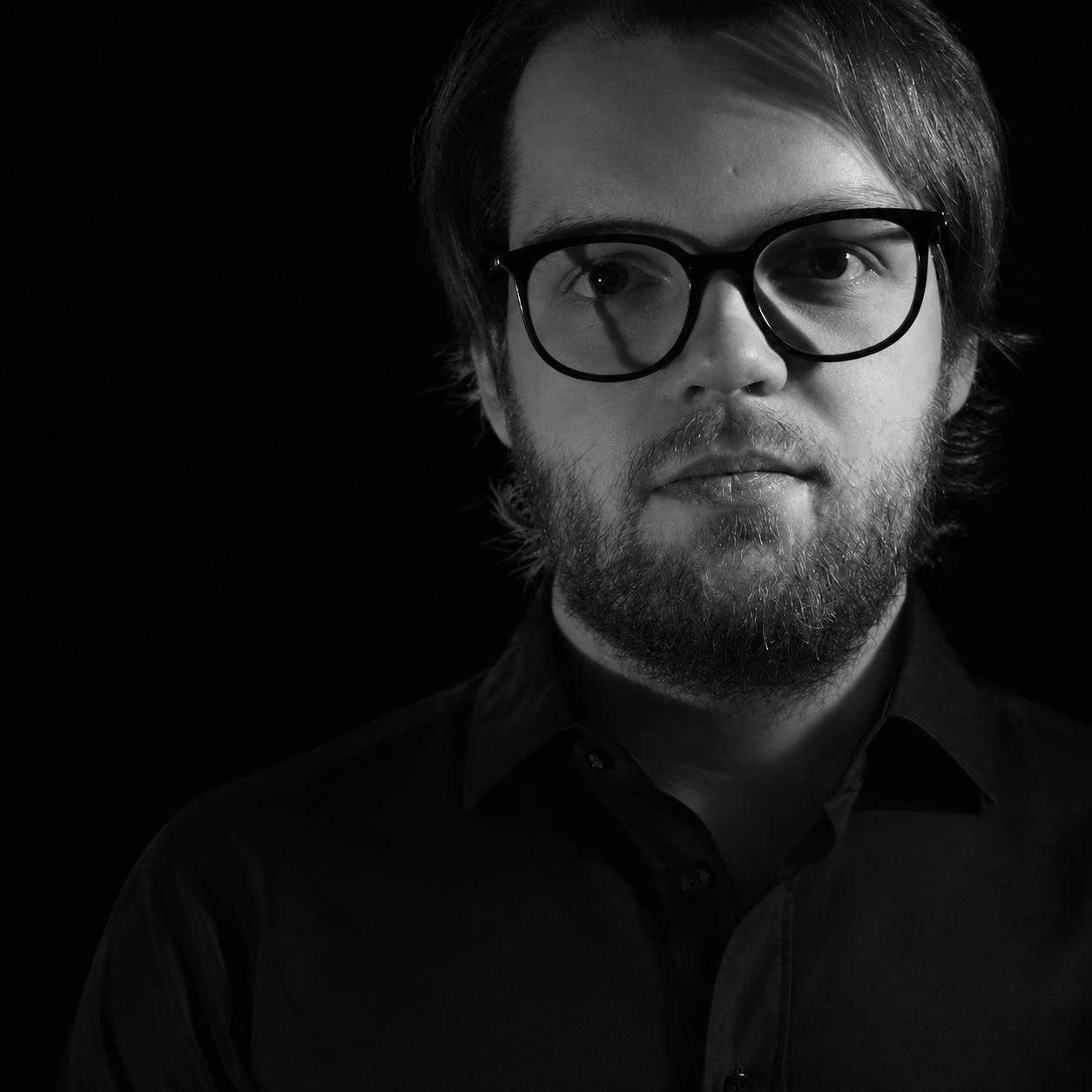
Alec Harvey
Architectural Technologist
At Chrome Design since 2021. Alec owns Act III of the Chrome Sequence — document. It's the point where a project stops being an intention: the complete technical drawing set, coordination with the municipality, the architect and the structural engineer, then the tender documents that make bids comparable. He also built the studio's drawing standards. The rigour of a Chrome document set is his.

Angelica Pavoni
RH + Business Development
At Chrome Design since 2021. Angelica holds together what runs beneath all four acts of the Chrome Sequence. Mandate scoping and contract documents. Coordination of orders, lead times and site schedules. Review of payment applications. Supplier and trade relationships. When a project lands on the date it promised, it's because she saw the delay coming three months out.
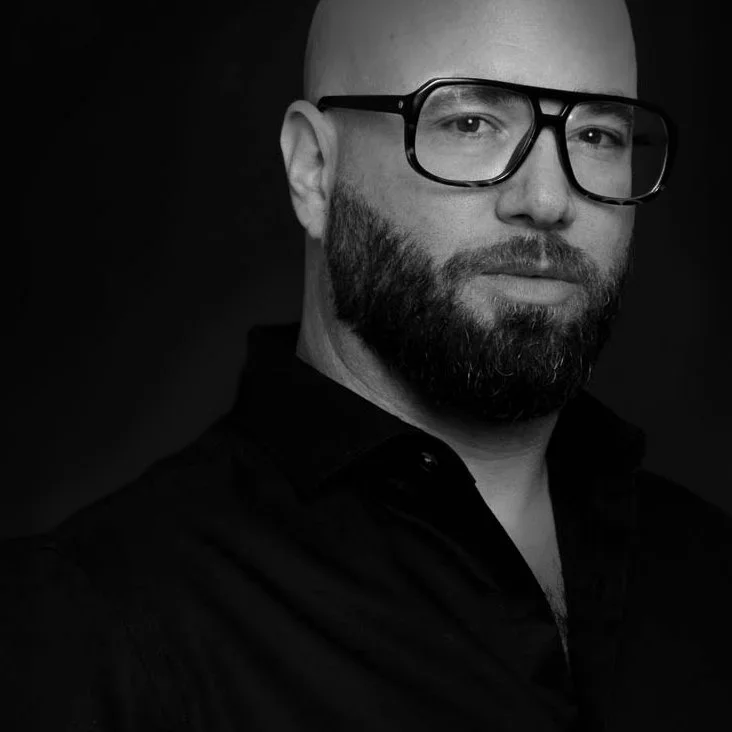
Richard Benoit
Founder + Head of Design
Founded Chrome Design in 2013. Before that, he was an artist. Exhibitions, graphic design, photography, fashion — and the workshop, where he built what he designed. That period gave him a rare skill in this trade: translation. A project almost never gets lost in the idea. It gets lost between the idea and the person who has to build it. Richard holds that crossing.
AWARDS + DISTINCTIONS
Distinctions
2026
Architecture MasterPrize
Interior Design Firm of the Year - shortlist
GRANDS PRIX DU DESIGN
Grand Lauréat — Interior Design - masters suite
THE INTERNATIONAL PROPERTY AWARDS (based uk)
Rive Urbaine - Residential interior appartment Québec Winner
Interior Design Website Canada Winner
CANADIAN INTERIORS - BEST OF CANADA
Royalmount Inclusive Washrooms · Winner
DNA PARIS DESIGN AWARDS
Orobico · Winner, Interior Design — Renovation
GLOBAL LUX AWARDS
Chrome Design · Winner, Best Interior Design Studio Canada
Chrome Design - Selectected Top 100
MONUMA— finalist, October 2026
French Velours — Résidentiel, Construction 1 M$ et plus
GRANDS PRIX DU DESIGN — finalists, October 2026
Chrome Design Studio · Gold, Firme de l'année — Petite (1–10)
Orobico · Gold, Residential (> 250 m²)
Orobico · Gold, Kitchen
Orobico · Gold, Suite principale
2025
GRANDS PRIX DU DESIGN
Royalmount Inclusive Washrooms
Prix de l'Année, Interior Design
Grand Lauréat — Commercial Space ≤ 150 m²
Grand Lauréat — Interior Design + Lighting
Gold — Commercial Space ≤ 150 m²
Gold — Interior Design + Collaboration
Gold — Interior Design + Lighting
Gold — Interior Design + Materials
Gold — Interior Design + Colour
Gold — Interior Design + Art Integration
Rennai
Grand Lauréat — Commercial Space, Beauty & Cosmetics
Gold — Commercial Space, Beauty & Cosmetics
Gold — Commercial Space > 500 m²
Gold — Interior Design + Lighting
Gold — Interior Design + Materials
Silver — Interior Design + Colour
Both delivered in consortium with Carbonleo, Lemay and Borrallo Interiors.
2024
FANTINI DESIGN AWARDS - NORTH AMERICA
Green Chrystal · Winner
GRANDS PRIX DU DESIGN
French Velours
Grand Lauréat — Residential, 150–500 m²
Gold — Residential Space, 160–540 m²
Gold — Residential Kitchen
Gold — Special Project, Staircase
Vanilla
Gold — Residential Space, 160–540 m²
Gold — Residential Kitchen
Gold — Residential Bathroom + Spa
2023
GRANDS PRIX DU DESIGN
Lyncroft
Silver — Kitchen, Residential 150–500 m²
2022
Grands Prix du Design
Hôtel Particulier — 220 Saint-Paul Ouest
Gold — Residential Space over 500 m²
Gold — Special Prize, Interior + Art Integration
2020
GRANDS PRIX DU DESIGN
Lazard
Gold — Residential Space, 160–540 m²
Gold — Residential Bathroom
MEDIA + PRESS
Upcoming
Montreal Interiors — Figure 1 Publishing, 2027
2026
INT.Design —no. 098
The World of Interiors — November issue
The World of Interiors — October issue
Canadian Interiors — Best of Canada
Selected
INTÉRIEURS — no. 095
INTÉRIEURS — no. 092
CANAPÉ — no. 005
OBJEKT International — no. 039
Chez Soi — no. 358
Chez Soi, hors-série — no. 023
Dear experienced designers + collaborators.
You're probably not looking. Few people are, at this stage — busy, well paid, and quietly resigned to the trade narrowing as you get more senior. More management, less drawing. More meetings, less material.
Here it would run the other way. At a forty-person firm you're a line on an org chart. Here you'd be a third of the studio's capacity — with everything that implies about responsibility, and everything it implies about latitude. We're not looking for someone to train. We're looking for someone whose arrival changes what the studio can take on.
Before the studio, there were twenty-five years of drawing.
Visual arts first. The hand before the software. Then ten years across the architectural disciplines — where intention meets the beam, the duct, the pipe nobody drew.
Something gets learned there that no school teaches. A well-designed project doesn't fail at once. It fails slowly, by concession, one detail at a time, until nobody remembers what it was meant to be.
Chrome Design came out of that refusal. Summer 2013.
An empty room says nothing at first.
You have to come back. At different hours. Watch where the light falls at three in the afternoon in February, when it sits low and tells the truth about an orientation.
Only then does the studio draw. And what it draws, it carries all the way down — millwork to the millimetre, electrical, plumbing, coordination with the engineers. Hundreds of pages the client will never see. That is where a project is actually won.
The rest is in what gets taken out.
Walnut is not a colour.
It changes the temperature of a room. Travertine changes its acoustics. A threshold moved eight centimetres changes how someone enters their own home for twenty years.
The studio works at that scale. Not because it's refined. Because that's where it's decided.
It applies the same way to a penthouse and to a public washroom at Royalmount — a room nobody photographs and everybody walks through.
A drawing asks you to imagine.
A space doesn't.
The client walks through it in virtual reality before a single line is drawn. Not a rendering to approve — a room to stand in. They look up, they hesitate, they ask why the threshold sits where it sits. The studio listens again, and moves it.
Decisions that used to happen on site, in dust, with a contractor waiting, now happen in a chair, months earlier, for free.
That is the whole point. Everything the studio does with technology answers to one rule: decide before anything is cut.
The tools change. Rendering, immersion, whatever comes after. What they're for doesn't. They exist so a client never has to trust a promise — and so a builder never receives a drawing that was hoped rather than checked.
Nothing here is generated. It's composed, then tested until it holds.
Since then, thirteen years.
Residential renovations, new builds, penthouses, country houses. Retail, hospitality, wellness — alone, or in consortium with teams many times the studio's size.
Nothing here is remote. The studio works in one room because that is where composition happens: decisions read against each other in the same conversation, rather than passed between inboxes.
It's growing. Slowly, and by hand.
more
Nothing here is generated. It's composed, then tested until it holds.
"It gave us a clear, exciting vision of what was possible and helped us make confident decisions from the start." — Cove Beauty